It all starts with Taylor.
No, not that one.
We speak of Frederick Winslow Taylor who, like Taylor Swift, was born in eastern Pennsylvania, but the resemblance ends there. F.W. Taylor, who traced his ancestors back to the Mayflower, was set to enter Harvard, but postponed his plans due to problems with his eyesight and went to work as an apprentice machinist instead. Upon his promotion to foreman, he became interested in increasing worker productivity and eventually developed a method to increase profits and wages. Taylor became an independent consultant in 1893, teaching clients about his methods, and in 1911 he published his approach in The Principles of Scientific Management.
You can pick up the Kindle version of this short monograph at the link above, but be prepared for eugenicist takes on the intelligence of the working man, casual racism, and child exploitation. In a lame attempt at levity, Taylor jokes that the only harsh treatment a group of young factory girls received was to be seated too far apart to talk during their ten-and-a-half hour shift as quality examiners for ball bearings. (No worries, though – they did get four ten-minute “recess” periods throughout the day.)
The monograph starts with a long section on the phenomenon known post-COVID as “quiet quitting,” which Taylor terms “soldiering,” emphasizing the distinctly capitalist origins of our modern quality movement. Taylor then explains the components of Scientific Management:
- Development by management of the most efficient method for completing each task in the manufacturing processed based on scientific observation. This involves extensive experiments to determine the optimal loads, rest periods, techniques, and tools for each task. This concept seems obvious, but as Taylor recounts, before this point factory workers determined their own methods and even supplied their own tools. The scientific determination of the method resulted in a target metric for completion of work – for example, pounds of pig iron to be hauled in a day, or quantity of ball bearings accurately examined for defects.
- Selection of workers best suited to each task, which include testing workers for desirable qualities (for example, brute strength in pig iron haulers, sharp eyesight for the little tykes examining ball bearings) and reassigning workers who did not possess these qualities.
- Training of workers in the method for each task.
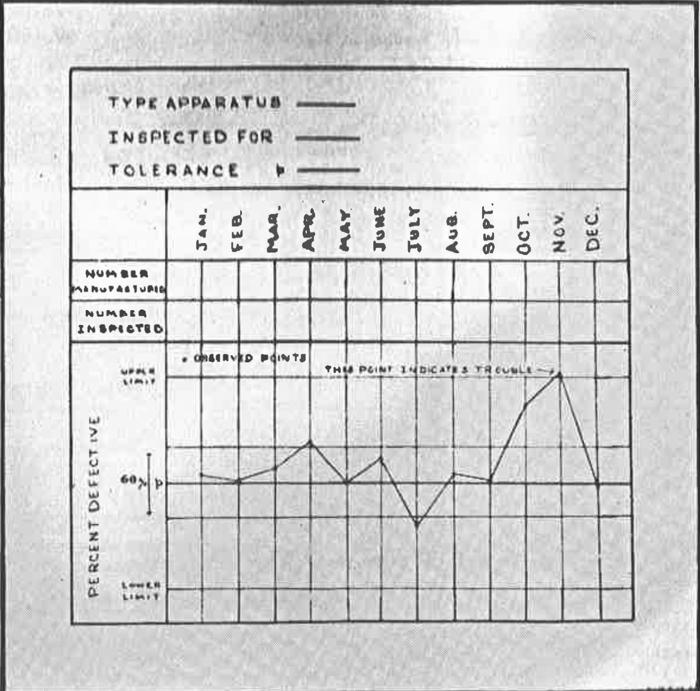
- Ongoing oversight and feedback of workers to enable them to achieve the target metrics identified. For example, the girls examining ball bearings for defects were given feedback on their output every hour, with coaching provided for girls who fell behind targets. Quality was measured by “over-inspection” (a quality control review) of a sample of batches, and the quality of the QC was measured by introducing a batch with a known number of defects.
- Financial incentives for productivity and quality increases.
Taylor’s ultimate goal was to increase workers’ wages along with profits. You’ll be heartened to know that the little girls inspecting ball bearings earned between 80 and 100% more under the scientific method then they had before, with two-thirds greater accuracy. They were so productive that a group of 35 was able to accomplish the same volume of work that had previously been done by 120 – but we’ll imagine that the 85 girls laid off were able to make good use of their time by going back to school and learning how to read.
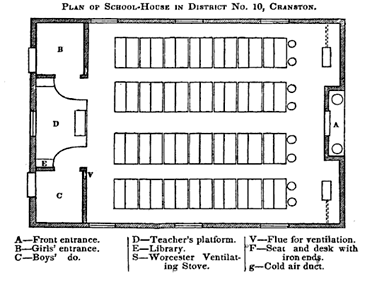
Taylor became quite wealthy as the world’s first management consultant, and “Taylorism” enjoyed a vogue beyond the factory floor. Education reformers in the late 19th century adopted standardized tests, standardized curricula, and even standardized classrooms in an effort to improve quality. If your school day was punctuated by a bell every 38 minutes that signaled the change of classes – that’s Taylorism.
In clinical research, Taylorism lives on in standard operating procedures, training requirements, quality control steps, and key performance and quality metrics.